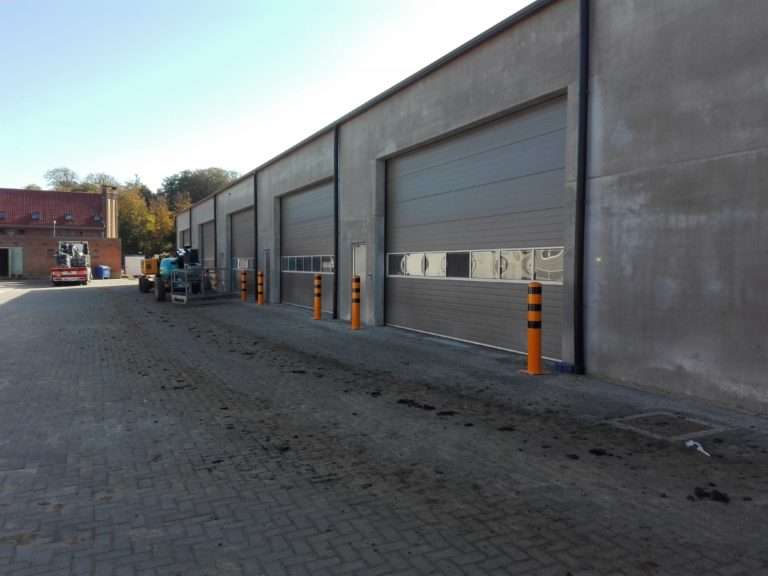
Once the Solhyd technology has reached the next development stage, an important success factor will be the ability to manufacture it at scale. We are therefore teaming up with industry experts to investigate scalable production methods and panel designs. When our hydrogen panel prototypes reach the performance targets, this will bring us one step ahead on reaching a scalable production. Supported by the Flemish Moonshot initiative, we are preparing a pilot production line to gain experience, develop novel production methods, and to eventually manufacture greater numbers of our new generation hydrogen panels.
The pilot production line will be hosted at TRANSfarm, a site near Leuven meant for up-scaling of technologies which have been developed at KU Leuven university. The brand new facilities are being constructed at the moment. The site includes a hall with room for 5 different pilot technologies. It will host a 350 m2 production space for the Solhyd project, which we will start equipping in 2022.
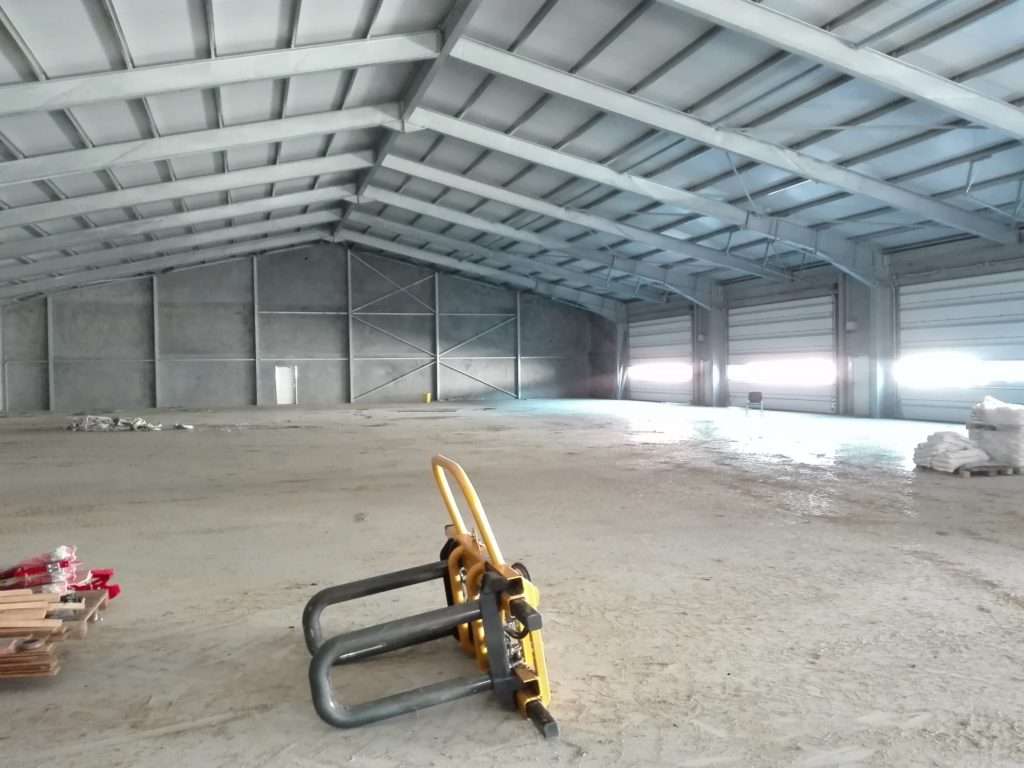
Inside view of the future production hall
Multidisciplinary innovation
The TRANSfarm site will be a state of the art facility powered by renewable energy. It is a reconverted farm which has been used for agricultural research since nearly a century. Even now, the site will be the home base not only for our technology, but also new innovations in the fields of green chemistry, biomedical research, materials science, agriculture and renewable energy.
One of those innovations is agrivoltaics, the combination of agriculture and solar energy capture. A test field will be situated right behind our production hall. Moreover, some hydrogen panels will also be installed above this test field. We aim to locally compress, stored and use this solar hydrogen for agricultural equipment.
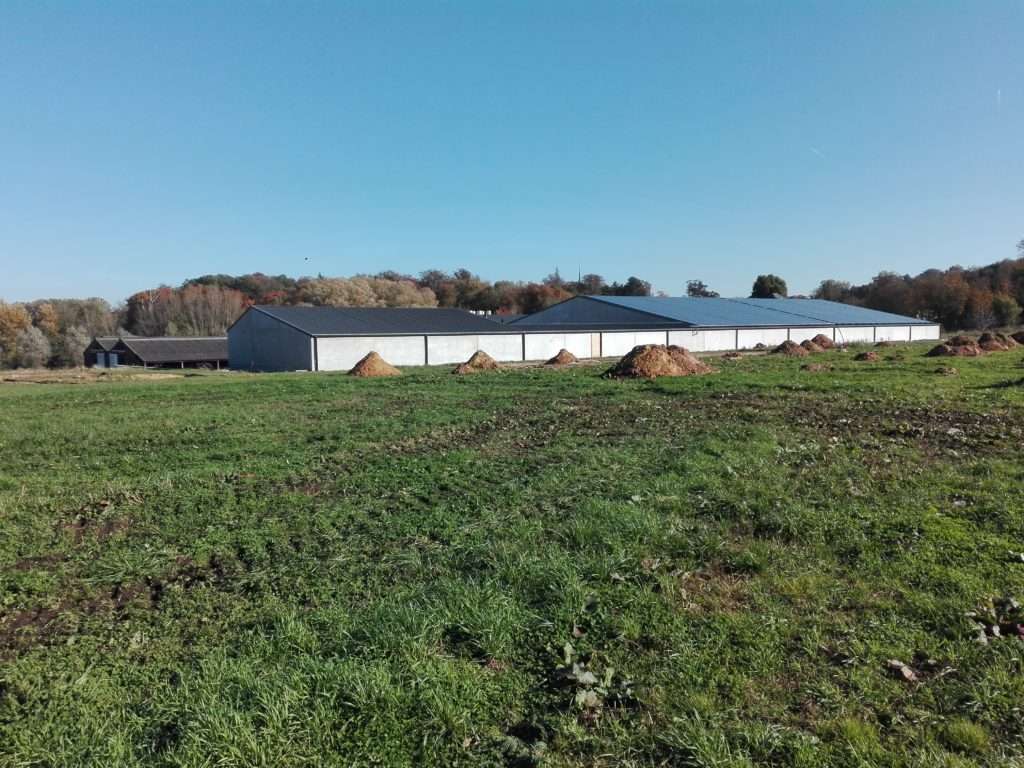
View from the back side of the production hall, where the agrivoltaics test field is being prepared.